
What to Expect in Your First Couples Therapy Session
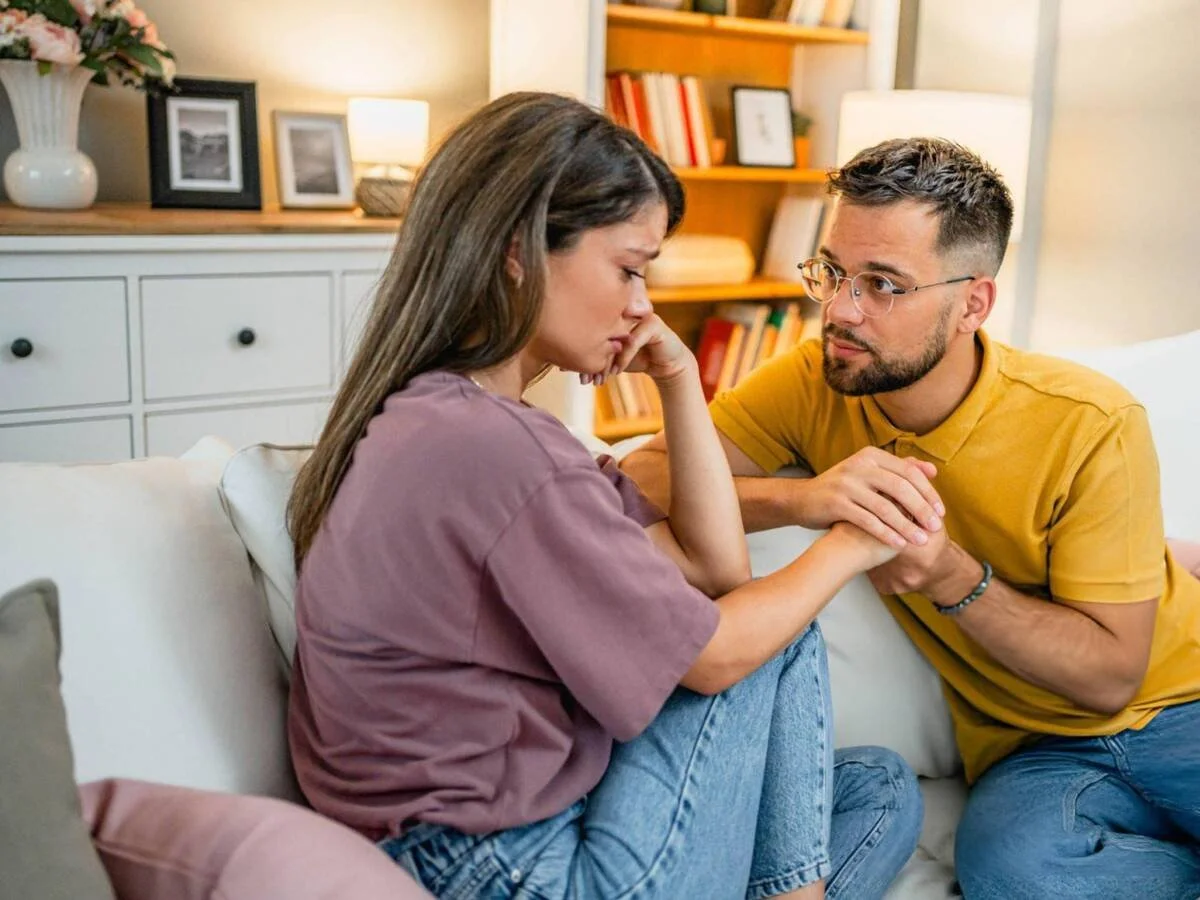
By the time most couples schedule their first therapy appointment, they've usually been struggling for a while.
Some have spent months trying to fix things on their own.
Others have spent years having the same arguments, wondering why nothing ever seems to change.
Often, one partner wanted therapy long before the other. Maybe you've suggested it several times before finally hearing, "Okay, let's try it." Or perhaps you both reached the same conclusion after realizing you felt more like roommates than partners.
Then, after making the appointment, a new set of questions often appears.
What is this actually going to be like?
Will the therapist take sides?
Will we spend the whole session arguing?
Do we have to tell our entire relationship story?
What if one of us talks much more than the other?
If you've wondered any of those things, you're not alone. They're some of the most common questions I hear before a first session.
The good news is that you don't need to prepare perfectly.
You don't need to organize years of relationship history.
You don't even have to agree about what the problem is.
The first session isn't about fixing everything.
It's about beginning to understand what keeps happening between the two of you so that change becomes possible.
Prefer to Watch Instead?
If you'd rather watch a quick overview first, here's a short video explaining what you can expect during your first couples therapy session, including common concerns like whether the therapist will take sides and what actually happens during that first appointment.
▶ Watch: What to Expect in Your First Couples Therapy Session
You Don't Need to Know Where to Start
One of my favorite moments in a first session is when a couple looks at me and says,
"We honestly don't even know where to start."
They usually apologize.
I almost always smile.
Because that tells me they're exactly where they're supposed to be.
Many couples think they need to explain everything perfectly.
They worry they'll leave out something important or won't tell the story in the right order.
You don't have to carry that responsibility.
Part of my job is slowing the conversation down.
Instead of trying to tell me every important event from your relationship, we'll begin paying attention to what's happening between the two of you right now.
Ironically, that's often where the most important information is.
What Doesn't Happen in the First Session
Many couples imagine their first session will involve getting through every major problem in their relationship.
They worry they'll have to tell their entire story.
That they'll be expected to relive every painful moment.
Or that they'll leave with every conflict finally resolved.
That isn't how I approach the first session.
The goal isn't to unpack years of history in one hour or decide who was right in every argument.
It's to begin understanding the relationship that's unfolding between the two of you today.
You also don't have to force yourselves to be more vulnerable than you're ready to be.
I won't expect either of you to share your deepest emotions before trust has had a chance to develop.
Therapy is a process, and emotional safety grows over time.
One thing that often surprises couples is that they don't have to remember every important argument or worry about leaving something out.
If something has been shaping your relationship, it almost always finds its way into the room.
It may show up in a misunderstanding.
A moment of defensiveness.
One partner pulling away while the other reaches harder.
Those moments aren't distractions from the work.
They are the work.
Because instead of only talking about what happened last Tuesday, we get to understand what is happening between the two of you right now.
That gives us something much more valuable than a perfect retelling of the past.
It gives us the opportunity to slow the cycle down together and begin changing it.
I'm Not Looking for Who Is Right
One of the biggest fears people bring into couples therapy is that the therapist will decide who's right.
Sometimes one partner hopes I'll finally convince the other person to understand them.
Sometimes the other partner worries they'll spend the session defending themselves.
That isn't how I approach couples therapy.
One of the first things I often tell couples is that my focus isn't on deciding who's the problem.
In many ways, I think of the relationship as my client.
I'm paying attention to what happens between the two of you.
Where do conversations begin feeling unsafe?
How do you lose each other?
What happens just before the argument takes over?
Those questions usually tell us much more than deciding who won the last disagreement.
One thing I appreciate about Emotionally Focused Therapy is that it assumes both partners usually make sense.
The person who gets louder is often trying desperately to stay connected.
The person who shuts down is often trying desperately to keep things from getting worse.
Neither partner is usually trying to create distance.
They're trying to protect themselves.
Unfortunately, those protective reactions often become exactly what keeps both people feeling alone.
We Work With What Happens in the Room
Many people imagine couples therapy as talking about arguments that happened during the week.
Sometimes we do.
But one thing that surprises many couples is that the same places they get stuck at home usually show up during therapy.
That's actually one of the greatest advantages of doing the work together.
We don't have to guess what happens between you.
We get to see it.
Maybe one partner starts explaining.
The other interrupts.
Someone feels criticized.
Someone becomes quiet.
One partner tries harder to be understood.
The other pulls away.
Those moments aren't interruptions to therapy.
Those moments are the therapy.
At times, I may invite you to talk directly to each other rather than only through me.
I'll help slow the conversation down.
We won't be trying to win the argument.
We'll be trying to understand what happens between the two of you when you get stuck.
Because those moments are where change begins.
We'll become curious about questions like:
"What happened inside you just then?"
"What did you hear your partner saying?"
"What were you needing in that moment?"
Those few seconds often tell us more than thirty minutes of talking about the argument afterward.

The cycle often becomes visible during the session.
Instead of only talking about what happens at home, we can slow the interaction down together and understand where both partners lose each other.
What If We Start Arguing?
People often ask,
"What if we argue during the session?"
My answer usually surprises them.
At some point, you probably will.
Not because I want you to argue.
But because the same patterns that happen at home naturally show up in therapy too.
That isn't a sign the session is going badly.
It's an opportunity.
Instead of replaying an argument from memory, we can slow down what's happening in real time.
Often, that's where couples begin understanding each other differently for the first time.
Communication Skills Matter, But Emotional Safety Matters Too
Many couples come to therapy hoping they'll finally learn better communication skills.
Communication certainly matters.
Learning how to slow conversations down, listen differently, and express emotions more clearly can all be helpful.
But one thing I've found is that communication often breaks down because partners no longer feel emotionally safe with each other.
When someone feels criticized, overwhelmed, rejected, or alone, even the best communication techniques become difficult to use.
That's why, in Emotionally Focused Therapy, we don't only focus on what to say.
We also focus on creating the emotional safety that makes those conversations possible.
As couples begin feeling safer with each other, they're often surprised to discover they're communicating differently without having to remember a script or technique.

Change begins with feeling safer together.
As emotional safety grows, couples often discover they already have many of the communication skills they were unable to access while feeling stuck.
What You Can Expect From Me
My role isn't to referee arguments.
It isn't to tell either of you who's right.
My job is helping both of you understand the places where your relationship keeps getting stuck.
Sometimes that means slowing a conversation down.
Sometimes it means helping one partner find words they've never been able to say before.
Sometimes it means helping the other hear something they've never really understood before.
Throughout the process, I'm paying attention to the cycle that's pulling both of you away from each other.
One thing I often tell couples is that my goal isn't for you to need me forever.
My goal is helping the two of you become the kind of couple that can recognize when you've gotten stuck and find your way back to each other after therapy has ended.
Frequently Asked Questions
Will you take sides?
No.
My role isn't deciding who's right.
My role is helping both partners understand what happens between them and how the relationship gets pulled into the same painful cycle.
What if we argue?
That's okay.
Those moments often become some of the most valuable parts of therapy because they allow us to slow the interaction down and understand what's happening underneath it.
Do we need to prepare?
No.
You don't need to make notes or agree on what the problem is beforehand.
Just come as you are.
We'll figure out where to begin together.
A Reassuring Perspective
Walking into your first couples therapy session can feel vulnerable.
That's understandable.
You're inviting someone into one of the most important relationships in your life.
You don't have to know exactly what to say.
You don't have to convince me of your perspective.
You simply have to be willing to begin.
I've yet to meet a couple who walked into their first session saying everything perfectly.
That's never been the goal.
The goal is creating a space where, often for the first time in a long time, the two of you can begin understanding what keeps happening between you instead of continuing to get caught inside it.
Once that starts making sense, something important begins to change.
Not because you've memorized better communication techniques.
But because the relationship itself begins feeling safer.
And when relationships become safer, couples often discover they already have far more capacity to listen, comfort, repair, and reconnect than they realized.
To learn more about how couples therapy can help you understand your relationship patterns and reconnect emotionally, visit my Couples Therapy in Columbia, MD page.
For a deeper understanding of what couples therapy looks like and what to expect throughout the process, read The Ultimate Guide to Couples Therapy in Columbia, MD.
If you're in Maryland and you've been thinking about taking that first step, I'd be honored to help.